



Learn about the 9 Oldest, Tallest, and Biggest Trees in the World
Trees are some of the most interesting and diverse living organisms in the world. How they communicate, how they grow for generations, and how they adapt to some of the harshest environments on the planet are questions that have captured the human imagination for thousands of years.
Trees come in all shapes and sizes, with some having amazing fun facts that inspire us, and others having incredible stories of survival against the backdrop of historic events. From the tallest types of trees in California to the largest canopies in India, let’s explore the oldest, tallest, and biggest trees in the world. Whether by merit of age, height, volume, or diameter, these are the rockstars of the tree world — and incredibly, many of them still have room to grow.
What Are the Oldest Trees in the World?
What is the oldest individual tree in the world? Methuselah tree
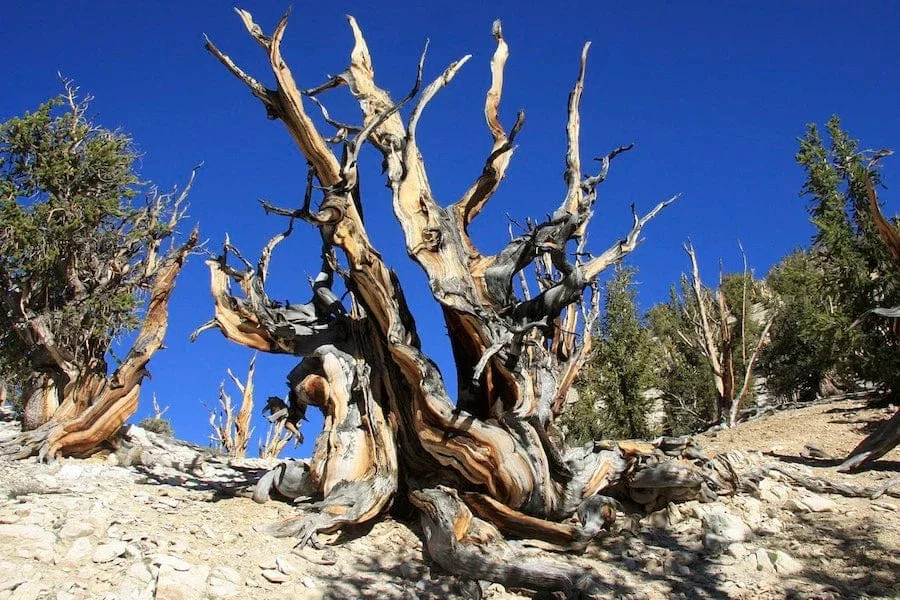
Species: Great Basin bristlecone pine (pinus longaeva)
Estimated Age: Between 4,800-5,000 years old
Location: Methuselah’s exact location is kept secret for its safety, but it lies somewhere among the aptly named Ancient Bristlecone Pine Forest in the White Mountains of eastern California — part of the Inyo National Forest.
Learn More: Methuselah and other bristlecone pines are able to grow so old thanks to biological adaptations that have earned them a place in the scientific category of “extremophiles.” They thrive in soils where other trees struggle to grow, thanks to wood that is extremely dense and resinous, making them resistant to insects, fungi and other pests. With adaptations like these, it’s no wonder Methuselah appears here as the oldest living tree.
What is the oldest tree in Asia? Cypress of Abarqu (Sarv-e Abarkuh)
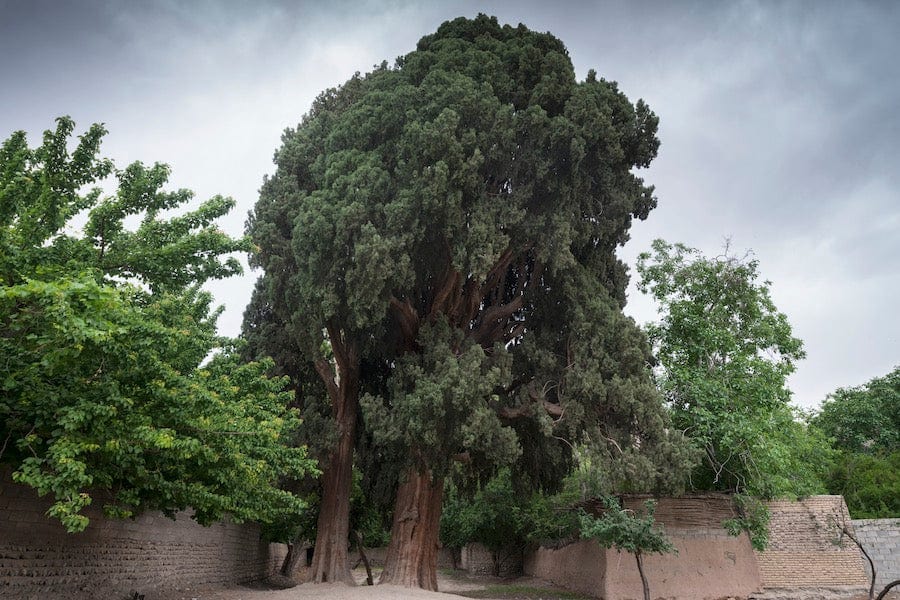
Species: Common Cypress; Italian Cypress; Mediterranean Cypress (Cupressus sempervirens)
Estimated Age: Estimated to be over 4,000 years old, making it likely to be the oldest tree in Asia
Location: The Iranian city of Abarkuh
Learn More: An ancient figure, the Cypress of Abarqu rises above many others to make it onto our list of the oldest trees in the world. Cyprus is a particularly notable tree species in Iranian history and culture, appearing in Iranian poetry and carvings in Persepolis, the capital of the ancient Achaemenid Empire. The origins of the tree, also known as the “Zoroastrian Sarv”, remain uncertain.
What is the world’s oldest clonal tree? Pando, also known as the “Trembling Giant”
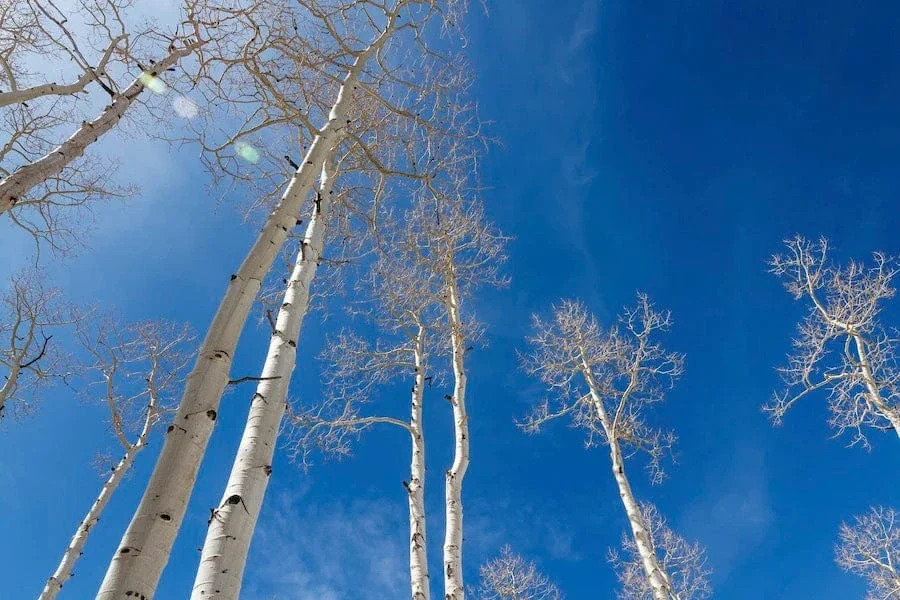
Species: A clonal colony of Quaking Aspen (Populus tremuloides). What is clonal colony? Unlike the other entries on this list, Pando is not one singular trunk with branches, but instead many biologically identical trunks with a shared root system.
Estimated Age: Scientists can’t pinpoint Pando’s exact age, yet evidence suggests its original aspen seed sprouted several thousand years ago. It may even date as far back as 14,000 years ago, when the Fish Lake Valley was emerging from the last glacial maximum.
Location: Spanning over 106 acres of Southern Utah’s Fishlake National Forest
Learn More: At first glance, Pando’s 40,000+ aboveground stems appear to be individual trees. Amazingly, each one is a genetically identical part of the same tree, connected by a vast underlying root system that weighs about 13 million pounds. That makes it one of the largest and heaviest land organisms on the planet. While the Pando is undeniably one of nature’s most impressive accomplishments, field measurements and historical photographs reveal that the tree is shrinking in response to a range of threats, including over-grazing.
What Are the Tallest Trees in the World?
What is the tallest tree in the world? The Hyperion
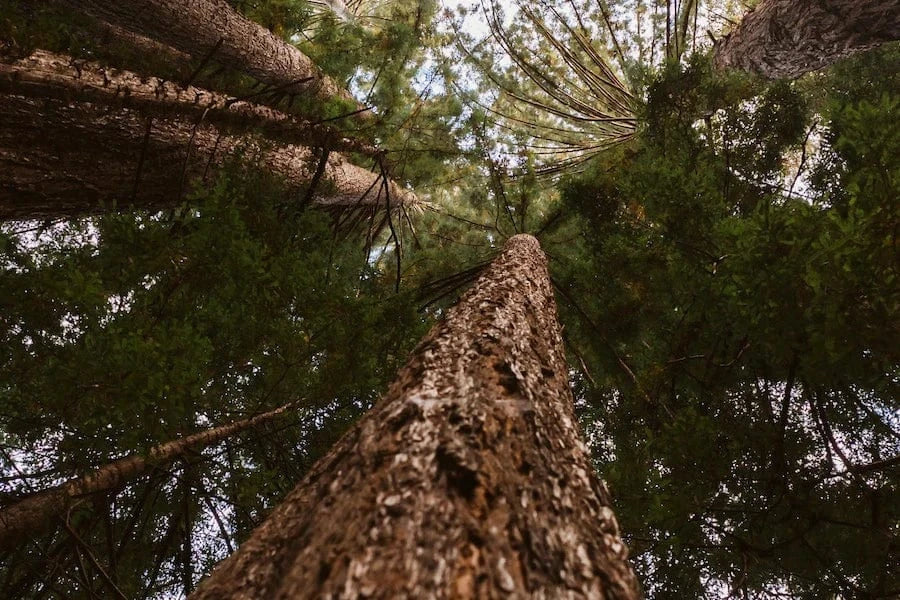
Species: Coastal redwood (Sequoia sempervirens). This should come as no surprise: majestic redwoods are among the tallest and oldest trees on the planet, and their existence dates back a whopping 200 million years, to the Jurassic period.
Height: The Hyperion reaches a staggering 379.1 feet high!
Estimated Age: Discovered in 2006 by two naturalists and confirmed by redwood expert Stephen Silett, it has quietly grown for an estimated 700-800 years.
Location: Somewhere in the heart of Redwood National Park in California.
Learn More: Access to this tree by recreational hikers, climbers and tree enthusiasts has been blocked by the National Park Service, with a hefty $5,000 fine for violators. This is for the protection of the tree itself, and the surrounding old growth redwood forest. Prior to the protection, visitors were bushwhacking to the remote tree, damaging the understory and leaving trash behind. Park rangers say that from the ground, the tree doesn’t really stand out, because you can only see the first 150ft — but that the curiosity is understandable. Just a few hundred feet away from this giant is a clearcut from the 1970’s. That means that Hyperion was maybe weeks away from being cut down due to deforestation before the land was protected with National Park status by the Carter administration.
What is the World’s Tallest Tropical Tree? The Menara
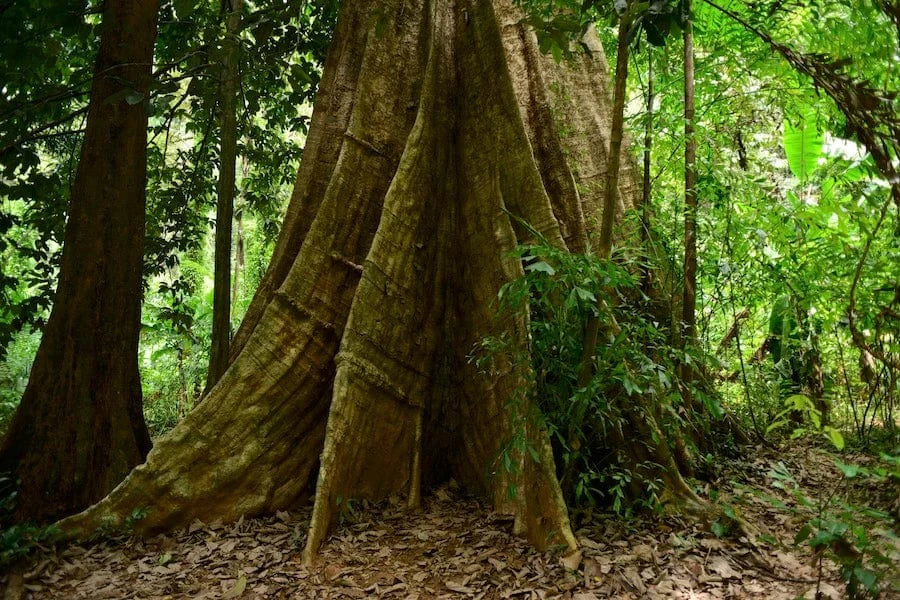
Species: Yellow meranti (Shorea faguetiana)
Height: A whopping 330 feet high.
Location: Sabah, a Malaysian state located on the island of Borneo.
Learn More: Named after the Malay word for “tower”, the Menara is also the world’s tallest living hardwood tree, having claimed the title from Centurion in 2022, after the tree’s top fell off. Part of what gives the Menara its great height is its near-perfect symmetry, which allows its trunk to grow straight into the air. The yellow meranti species is highly endangered due to over-harvesting, but thanks to protection efforts and the establishment of the Danum Valley Conservation Area, these awe-inspiring monoliths can live on. Wildlife species that are also protected by the Conservation Area include the endangered orangutan, clouded leopard, and forest elephants.
What is the world’s tallest deciduous tree? Tualang
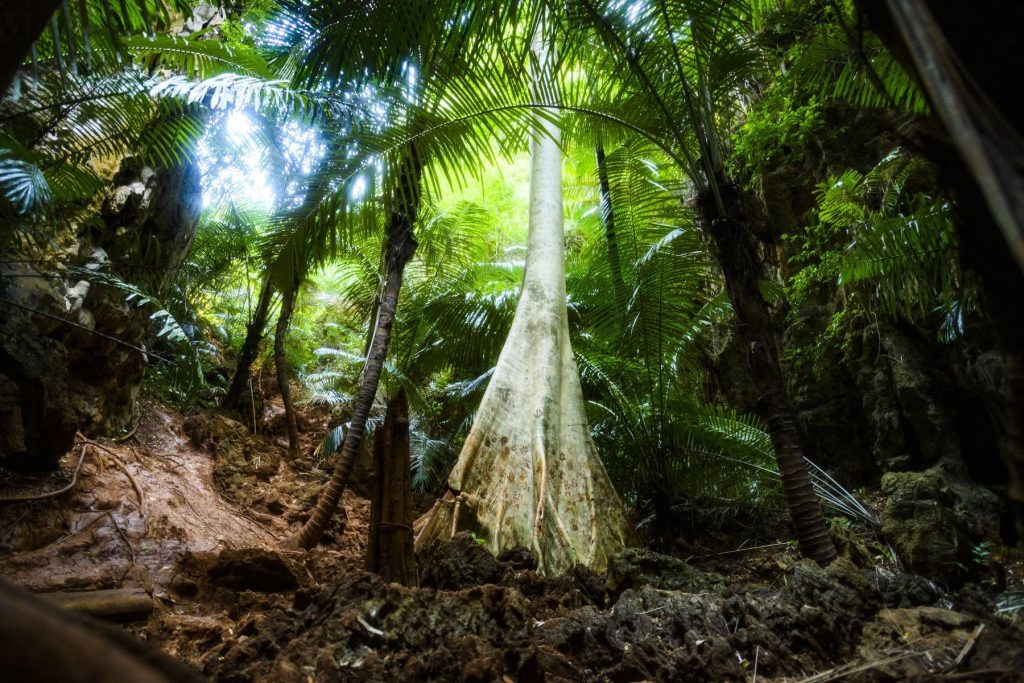
Species: Yellow meranti (Shorea faguetiana)
Height: The tree was measured at 281 feet, 4.4 inches high in 2007.
Location: Tawau Hills Park in Sabah on the island of Malaysian Borneo.
Learn More: The world’s tallest deciduous tree gets its name, tualang, from the Malay words of “tua” (old) and “helang” (eagle). A member of the legume family, yellow meranti trees grow in the rainforests of Sumatra, southern Thailand and the Malaysian Peninsula. Local folklore has helped this tree reach its meteoric heights: the tualang tree is thought to be inhabited by spirits, and it’s considered bad luck to cut them down.
What Are the Biggest Trees in the World?
What is The Biggest Tree in the World? General Sherman
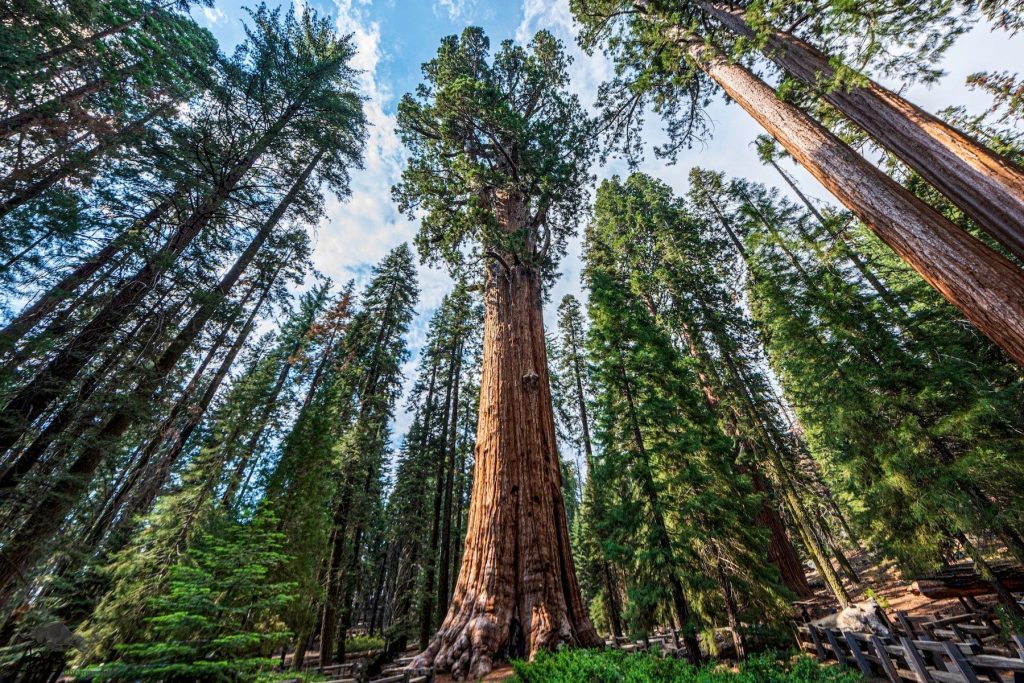
Species: Giant sequoia (Sequoiadendron giganteum)
Size: At an incredible 56,186 cubic feet (as of 2013), it is, by volume, the largest single living tree in the world.
Location: Sequoia National Park, California.
Learn More: Also known as General Sherman, this giant sequoia represents the perfect cross-section of height, width, and age. Some of its branches are larger than individual trees you would encounter in other forests and parks — and if you’ve ever had the pleasure of visiting, you know the emotions that are triggered by being in the presence its grandeur. While fire plays an important role in their life cycle, General Sherman and other giant sequoia trees are threatened by the increasing size and intensity of forest fires today. To help protect these giants, rangers wrap the first 10-15 feet of their base with a protective foil.
What Tree Has the Stoutest Trunk in the World? El Árbol Del Tule
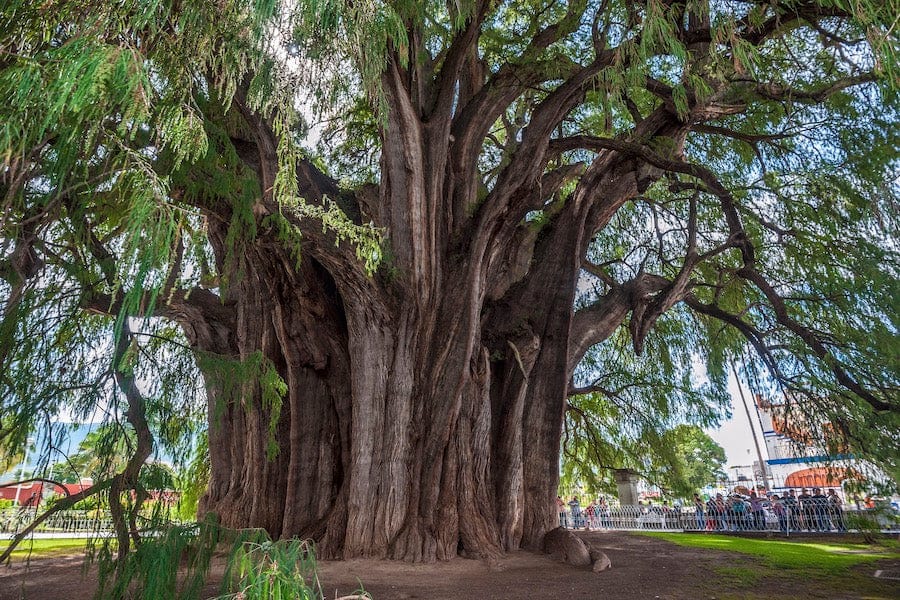
Species: Montezuma cypress (Taxodium mucronatum)
Size: Measurements place El Árbol del Tule’s trunk at 31 ft, 3.5 inches diameter — an impressive accomplishment given that it is “only” 116 feet tall.
Location: Tule, a town near Oaxca, Mexico
Learn More: While many of the world’s largest tree species are located in California, El Árbol del Tule makes this list thanks to having the stoutest trunk in the world. By volume, the tree is the third largest in the world, surpassed only by giant sequoia and coast redwood.
What Tree Has the World’s Largest Canopy? Thimmamma Marrimanu
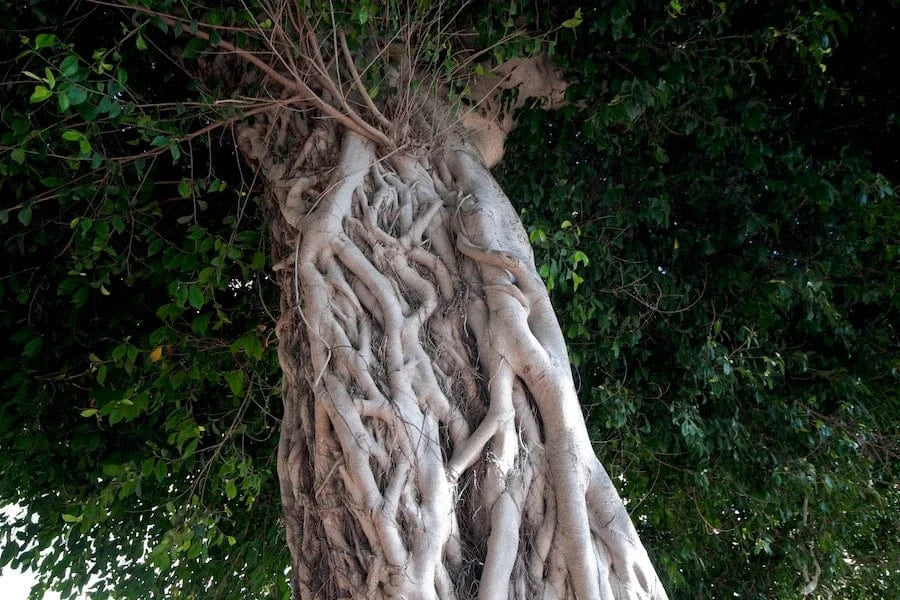
Species: Banyan tree (Ficus benghalensis)
Size: It has the largest canopy of any living tree in the world, covering a distance of 5.41 acres.
Location: Anantapur, Andhra Pradesh, India
Learn More: Thimmamma Marrimanu’s combined crowns occupy an area that’s equivalent to three soccer fields. Hindu legend has it that this tree grew from the spot where a widow, Thimmamma, threw herself onto her late husband’s funeral pyre. Its great size is most apparent when viewed from above. This impressive tree is cared for by the local forest department, who work to support its young roots, reinforce its larger roots, and water the tree via a specially designed underground pipe system.